
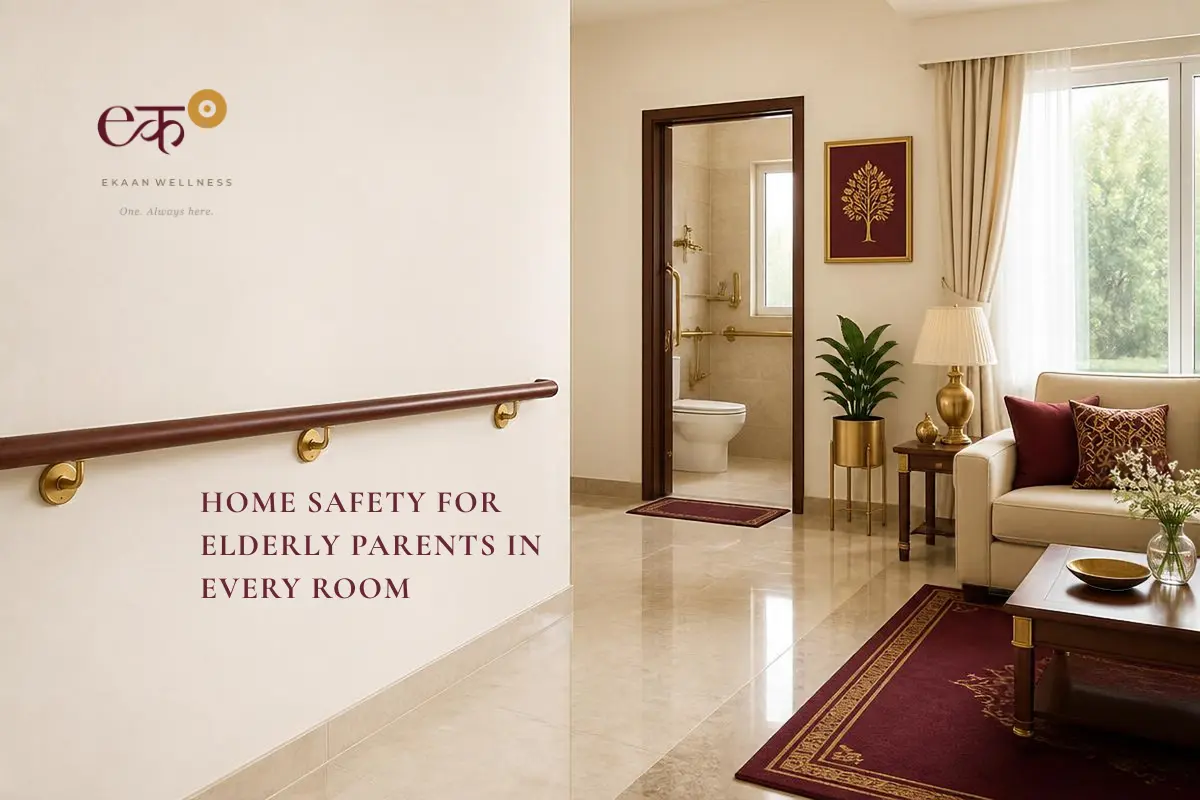
Home safety for elderly parents begins with checking how comfortably they move through the spaces they use every day. Clear walking routes, accessible essentials, suitable lighting and appropriate support can make daily life easier. A professional assessment can identify changes that suit the individual’s mobility and routine.
Walk through the home with your parent and ask where they feel unsteady or need help. Agree on changes together so the home remains familiar and comfortable.
A checklist for home safety for elderly parents
Entrances and walking routes
- Remove loose wires, clutter and unstable rugs from regular walking routes.
- Check that entrances, corridors and steps are well lit.
- Keep frequently used routes clear enough for any prescribed walking aid.
- Ask a professional about suitable handrails where steps are difficult.
Bathroom
- Keep floors dry and check that any non-slip mat stays firmly in place.
- Make soap, towels and other essentials easy to reach.
- Ask about correctly positioned and securely fitted grab rails if support is needed.
- Discuss difficulty using the toilet or shower with an Occupational Therapist before buying adaptations.
Bedroom
- Keep a light switch and phone within easy reach of the bed.
- Clear the route between the bed and bathroom.
- Place regularly used belongings where your parent can reach them comfortably.
- Ask for an assessment if getting into or out of bed has become difficult.
Living room and kitchen
- Keep seating areas easy to approach and avoid furniture that obstructs routes.
- Store everyday kitchen items within comfortable reach.
- Avoid arrangements that require climbing onto a stool to reach essentials.
- Ask your parent which activities have become awkward before moving belongings.
Know when a checklist is not enough
Repeated falls, new difficulty walking or increasing trouble with everyday tasks need professional attention. Discuss these changes with the relevant healthcare professional rather than assuming a home alteration alone will solve them.
A home assessment considers how the person uses the space. For example, a bathroom adaptation should suit their movement and support needs, not just the room’s dimensions. Our guide to mobility changes in older adults explains related changes families may notice.
What Ekaan Essential includes
Ekaan Essential’s home safety and wellbeing support includes one home safety and overall wellbeing audit per quarter. The plan also lists a quarterly Occupational Therapy assessment covering areas including physical function, home safety and daily activities.
These assessments sit alongside the plan’s scheduled Care Manager visits and other listed inclusions. They are not a promise that every adaptation, installation or item of equipment is covered by the membership fee.
If changes are recommended, ask what needs to be arranged, who will carry out the work and what it will cost. You can compare Ekaan’s memberships to understand their different levels of support.
Frequently asked questions
Which room should we check first?
Start where your parent finds daily tasks most difficult. The bathroom and the route from the bed to the toilet are useful starting points, alongside any area where a trip or fall has already occurred.
Does every older adult need grab rails?
No single adaptation suits everyone. Ask an appropriate professional whether rails are needed and where they should be fitted for your parent’s abilities and routine.
Does Ekaan Essential include home modifications?
The published plan includes assessments. It does not list building work or safety-equipment installation as included benefits. Confirm the scope and charges for any work separately.
Can a home safety assessment prevent every fall?
No. It can help identify environmental concerns, but falls may also involve health, balance, vision or medicines. A home assessment does not replace a clinical evaluation.
Final Takeaways
Begin with the routes and activities your parent uses most. Address simple obstacles, involve them in decisions and get professional advice for changes that require assessment. To understand the support available, speak with Ekaan Wellness.
Medical disclaimer: This checklist provides general information and does not replace an individual medical or Occupational Therapy assessment. Seek professional advice about falls, mobility changes and suitable home adaptations. No checklist or assessment can guarantee that falls or injuries will not occur.