
Nobody searches for elder care services because things are going well. You are probably reading this after a hospital visit that shook you. Or your father had a fall last week and you realised for the first time that he cannot manage alone anymore. Maybe you are an NRI sitting in another country, calling home every evening, worried sick about a mother who insists she is fine but clearly is not.
Whatever brought you here, this guide is written for you — not in corporate language, not with a list of services that reads like a hospital brochure. Just real, practical information that helps you make a good decision for someone you love.
Senior citizens in India today
Living with at least one chronic illness
Growth in home care adoption since 2019
What Is Elder Care, Really?
Elder care is any kind of structured support — medical or non-medical — that helps an older person live safely, comfortably, and with dignity. It could mean a nurse visiting twice a week to check blood pressure. A live-in attendant helping with bathing and meals. A trained specialist managing recovery at home. Or a full care plan that evolves as needs change.
In India, elder care also carries emotional weight that is hard to ignore — the guilt, the worry of what relatives will say, the belief that good children take care of their parents themselves. Getting professional help does not mean stepping away. It means stepping up.
The Main Types of Elder Care Services in India
- —Home healthcare for elderly — clinical care at home, handled by trained nurses or paramedics
- —Caregiver and attendant support — non-medical, day-to-day help with personal tasks
- —24-hour elderly care services — round-the-clock supervision at home or in a facility
- —Post-surgery care — recovery support after hospital discharge
- —Dementia and memory care — specialist support for Alzheimer's and related conditions
- —Nursing homes — residential care with full-time medical oversight
- —Companionship services — regular visits focused on mental wellbeing and social connection
Worth knowing:
Home Healthcare — Why Most Families Start Here
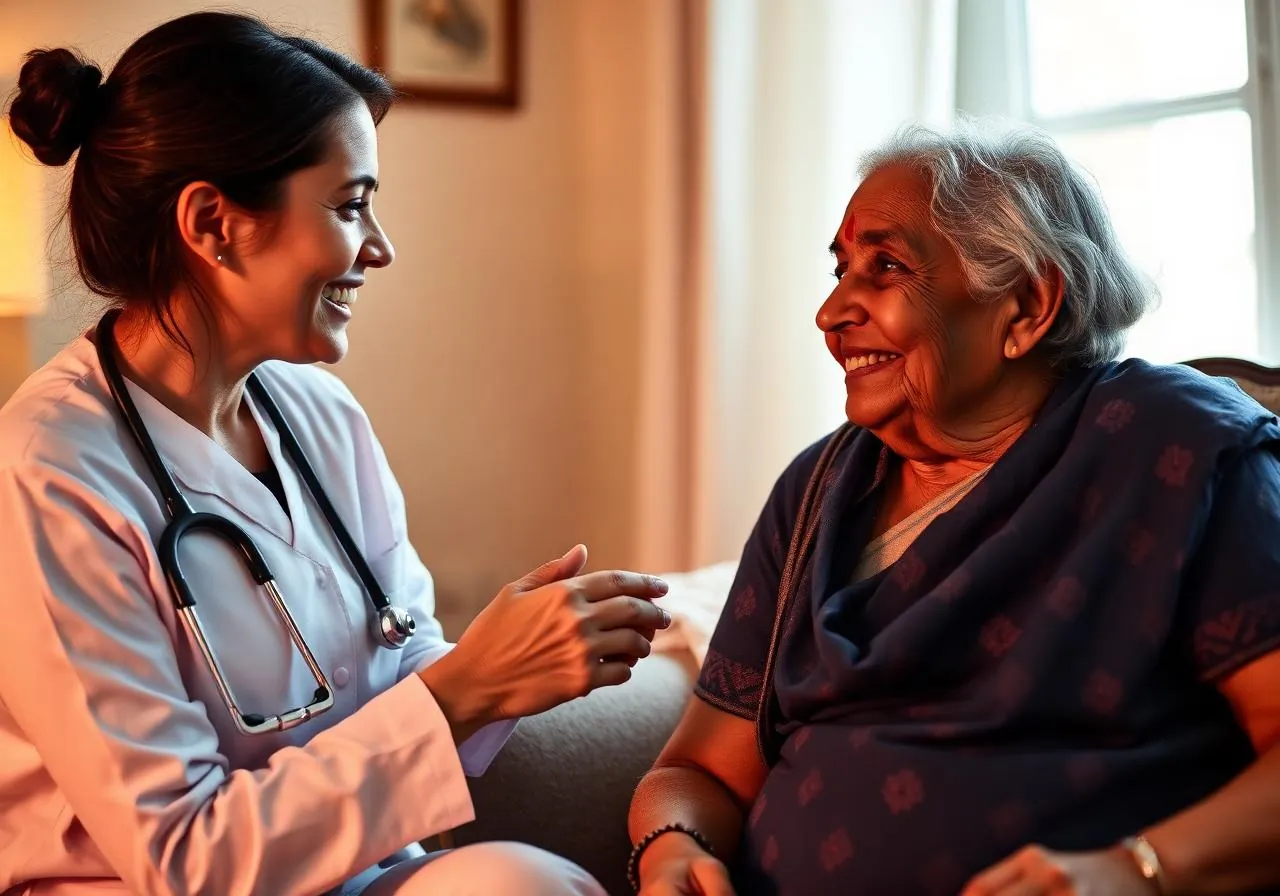
Of all the elder care options available in India right now, home healthcare is the one that has changed the most in the last five years. It used to be hard to find, inconsistent in quality, and difficult to trust. That has shifted significantly, especially in cities like Delhi NCR.
The idea is simple — instead of your parent going to a clinic for routine medical attention, a trained professional comes home. For an 80-year-old with mobility issues, avoiding a daily cab ride to a clinic is genuinely life-changing.
How to Know Which Type of Care Your Parent Needs
Ask three questions. Is the need medical — wounds, medication, recovery, chronic illness management? Is it functional — help with bathing, meals, mobility, daily tasks? Or is it emotional and social — companionship, engagement, reducing loneliness?
Most parents need a combination of all three. A good elder care provider will help you think through this honestly.
What to Look for in a Provider
- —One point of accountability — not five different vendors
- —A dedicated person who knows your parent, not a rotating roster
- —Clear communication with your family after every visit
- —Genuine warmth and patience, not clinical efficiency
- —Honesty about what they can and cannot do
Worth asking:
- —Does my parent get one dedicated person or a rotating roster of strangers?
- —How does the provider communicate with my family?
- —What happens in an emergency — who calls me and when?
- —Can the care plan change as my parent's needs change?
Getting professional help does not mean stepping away from your parents. It means stepping up for them in a new way.