
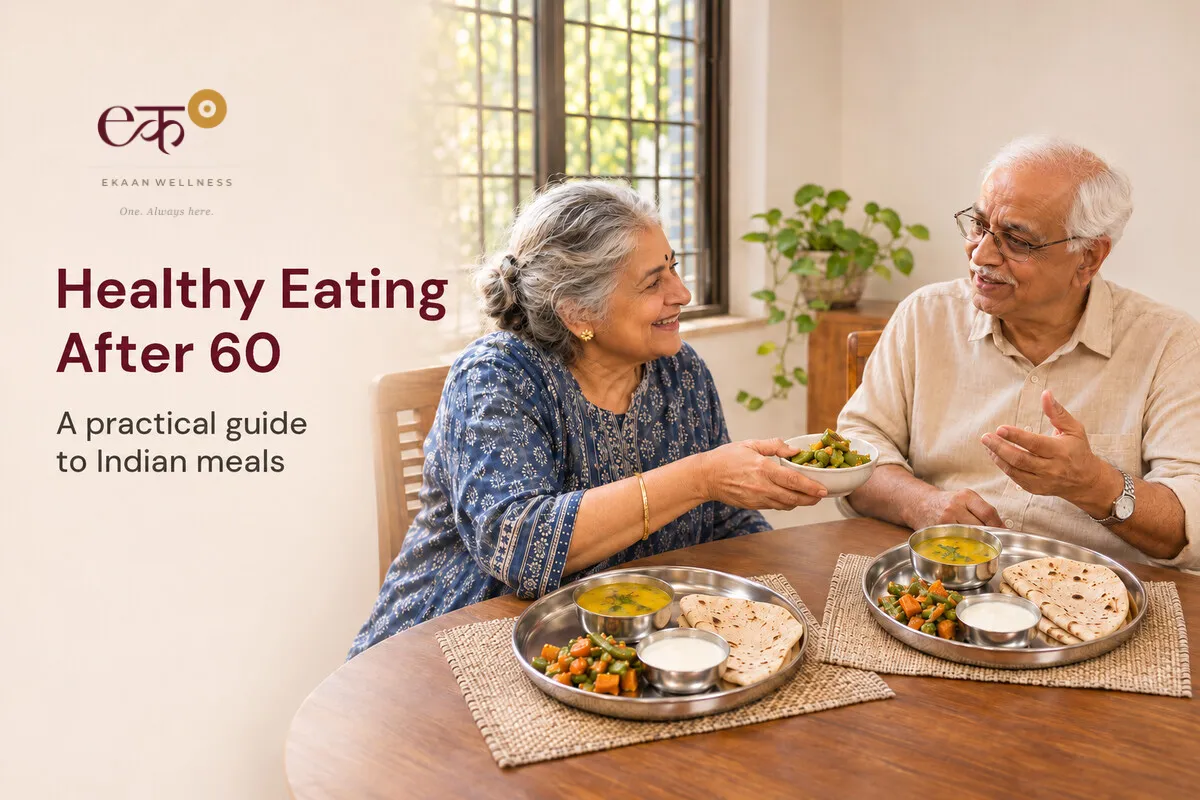
A healthy diet for elderly parents is not about strict rules or expensive foods. It is about getting enough protein, calcium, vitamins, fibre and fluids from simple, familiar meals — in portions and textures an older body can manage. This guide explains how nutritional needs change after 60, what a balanced Indian plate looks like, and when a family should ask a doctor or dietitian for help.
How do nutritional needs change in old age?
Short answer: As people age, they usually need fewer calories but the same or more of several nutrients — especially protein, calcium, vitamin D, vitamin B12 and fibre. Appetite, digestion, thirst and the ability to chew can all decline, so every meal needs to do more nutritional work in a smaller portion.
Several common changes affect how older adults eat:
- Lower energy needs. Metabolism and physical activity often slow down, so calorie needs fall. Nutrient needs do not fall in the same way.
- Reduced appetite. Many older adults feel full sooner or simply lose interest in food, especially if they eat alone.
- Weaker sense of thirst. Older adults may not feel thirsty even when their body needs fluids, which raises the risk of dehydration.
- Chewing and swallowing difficulty. Dental problems, loose dentures or a dry mouth can make hard or fibrous foods difficult.
- Changes in absorption. Some nutrients, such as vitamin B12, can be harder for an older body to absorb.
- Medicines and chronic conditions. Diabetes, blood pressure, kidney or heart conditions, and some medicines can change what and how much a person should eat.
In India, the National Policy on Older Persons defines “elderly” as people aged 60 and above. A 2022 status paper in the Indian Journal of Medical Research noted that India still has limited data on the diets and nutritional status of older adults, which is one reason individual guidance from a professional matters.
Key nutrients older adults need
Protein
Protein helps maintain muscle strength, supports healing and helps the immune system. Many older adults eat less protein than they need, often because dal, eggs, paneer or curd get pushed aside when appetite drops. Include a protein source at every meal — dal, besan, rajma, chana, curd, paneer, milk, eggs, fish or chicken, depending on the family’s food habits.
Age-related muscle loss (sarcopenia) is closely linked to protein intake and activity. Read more in our guide to sarcopenia in older adults.
Calcium and vitamin D
Calcium and vitamin D work together to support bone health. Bone density naturally declines with age, raising the risk of fractures after a fall. Good calcium sources include milk, curd, paneer, ragi, sesame (til) and green leafy vegetables. The skin also makes less vitamin D with age, and many older adults spend little time outdoors. A doctor can advise whether a vitamin D test or supplement is needed — do not start supplements without medical advice.
Vitamin B12
Vitamin B12 supports nerve function and the formation of red blood cells. Absorption can decline with age, and people who eat little or no animal food are at higher risk of low levels. Signs such as tiredness, tingling in the hands or feet, or memory changes should be checked by a doctor, who may order a blood test.
Fibre
Constipation is a common complaint in older age. Fibre from whole grains, millets, dals, vegetables and fruits supports digestion — but it works best with enough fluids. Increase fibre gradually to avoid bloating.
Fluids
Because the sense of thirst weakens with age, older adults should drink at regular intervals rather than waiting until they feel thirsty. Water, buttermilk (chaas), coconut water, dal, soups and milk all count towards fluid intake. Coconut water is rich in potassium, so if your parent has been asked to limit potassium, check with their dietitian before including it. People with heart or kidney conditions may have fluid limits set by their doctor, so follow medical advice.
Iron and other micronutrients
Iron (from green leafy vegetables, legumes and, for non-vegetarians, meat and eggs), potassium (from fruits and vegetables) and magnesium (from nuts, seeds and whole grains) are also important. Pairing iron-rich foods with vitamin C sources such as amla, lemon or guava can help absorption.
What does a balanced Indian plate look like for seniors?
A practical way to build a balanced meal is the plate method:
- Half the plate: vegetables and some fruit — seasonal sabzi, salad (if easy to chew), or cooked greens
- A quarter: whole grains or millets — roti, rice, dalia, ragi, jowar or bajra
- A quarter: protein — dal, chana, rajma, paneer, eggs, fish or chicken
- On the side: a bowl of curd or a glass of milk or buttermilk
- Small amounts: unsaturated cooking oils such as mustard, groundnut, rice bran or soybean oil for everyday cooking, ghee used only sparingly, and a handful of nuts or seeds
Limit fried snacks, sweets, packaged foods and extra salt. Pickles, papad and namkeen are high in salt and are worth reducing, especially for people with high blood pressure.
Sample one-day meal plan for elderly parents
This is a general example for an older adult without special dietary restrictions. It is not a prescription. People with diabetes, kidney disease, heart conditions, swallowing difficulty or food allergies need a plan from their doctor or a qualified dietitian.
| Time | Meal idea |
|---|---|
| Early morning | Warm water, a few soaked almonds or walnuts |
| Breakfast | Vegetable poha, upma or besan chilla with curd, or a moong dal chilla |
| Mid-morning | A seasonal fruit (papaya, banana, guava) or a glass of buttermilk |
| Lunch | Roti or rice, dal, seasonal sabzi, curd and a small salad |
| Evening | Tea or milk with roasted chana or makhana |
| Dinner | Light meal — vegetable khichdi with curd, or dalia, or soup with paneer |
| Bedtime (optional) | A small glass of warm milk |
Tips that help:
- Offer smaller, more frequent meals if appetite is low.
- Keep dinner light and early to support digestion and sleep.
- Choose soft textures (khichdi, dalia, well-cooked dal, steamed vegetables, curd) if chewing is difficult.
- Rotate grains and vegetables across the week for variety.
Common eating problems in older adults — and what families can do
Low appetite
Serve smaller portions on a smaller plate, add flavour with herbs and mild spices instead of extra salt, and prioritise protein-rich foods first in the meal. A sudden or ongoing loss of appetite, or unplanned weight loss, should be discussed with a doctor.
Difficulty chewing or swallowing
Softer foods help with chewing problems, and a dental check-up can identify loose dentures or tooth pain. Coughing or choking while eating or drinking can be a sign of a swallowing problem (dysphagia) and needs a medical assessment.
Constipation
Combine fibre with fluids and gentle daily movement. Persistent constipation or a change in bowel habits should be checked by a doctor rather than managed with laxatives alone.
Eating alone
Older adults who live alone often skip meals or rely on tea and biscuits. Shared mealtimes, a family video call during lunch, or a regular visitor can make a real difference. Our article on social isolation and loneliness in older adults explains how to spot and address this.
How diet connects to medicines and chronic conditions
Some foods can affect how medicines work, and some medicines affect appetite, taste or digestion. For example, people taking warfarin (a blood thinner) are usually advised to keep their intake of vitamin K-rich leafy greens steady rather than change it suddenly. Always share the full list of medicines with the doctor or dietitian when planning meals. Our guide to medication management for elderly parents covers how to keep track of medicines safely.
For older adults with diabetes, diet is part of a wider care routine that also includes foot care — see our diabetic foot care guide.
When should you see a doctor or dietitian?
Speak to a doctor or a qualified dietitian if your parent:
- Loses weight without trying, or their clothes become loose
- Eats much less than usual for more than a few days
- Coughs or chokes while eating or drinking
- Has diabetes, kidney disease, heart disease or another condition that needs a specific diet
- Feels unusually tired, weak, dizzy or confused
- Has ongoing constipation, diarrhoea or stomach discomfort
A professional can assess nutritional status, check for deficiencies and create a plan that suits the person’s health, food preferences and budget.
How Ekaan Wellness can help
The Ekaan Active membership includes one nutrition consultation every month, alongside regular wellness support for older adults in Delhi NCR. If you are unsure which plan suits your parent, you can compare all Ekaan memberships or contact the Ekaan team.
Frequently asked questions
What is the best diet for elderly people?
The best diet for elderly people is a balanced one that includes protein at every meal, whole grains, plenty of vegetables and fruits, dairy or other calcium sources, and enough fluids — in portions and textures the person can manage. Specific needs depend on health conditions, so a doctor or dietitian should personalise it.
How much should an elderly person eat in a day?
There is no single amount for everyone. Older adults usually need fewer calories than younger adults but still need enough protein and nutrients. Smaller, more frequent meals often work better than three large ones. A dietitian can advise on portions based on weight, activity and health.
Which foods should elderly people avoid?
In general, older adults should limit very salty foods (pickles, papad, namkeen), deep-fried snacks, sweets, sugary drinks and heavily processed foods. Foods that are hard to chew may need to be softened. Specific restrictions depend on medical conditions.
Is milk good for elderly people?
For most older adults who tolerate it, milk and curd are useful sources of protein and calcium. People with lactose intolerance can often manage curd or buttermilk better. Those with specific conditions should follow their doctor’s advice.
Do elderly people need supplements?
Some older adults may need supplements such as vitamin D, vitamin B12 or calcium, but this should be decided by a doctor after assessment and, where needed, blood tests. Supplements should not replace a balanced diet.
How can I get my elderly parent to eat more?
Offer smaller, frequent meals, serve favourite foods, make meals social, keep textures easy to chew, and check for underlying causes such as dental pain, medicine side effects or low mood. Persistent poor appetite should be discussed with a doctor.
Sources and further reading
- ICMR–National Institute of Nutrition, Dietary Guidelines for Indians (2024)
- Indian Journal of Medical Research, “Nutritional requirements for the elderly in India: A status paper” (2022)
- Vikaspedia (Government of India), Nutrition tips for the elderly
- NIH Office of Dietary Supplements, Vitamin B12 fact sheet for consumers
Medical disclaimer
This article is for general information only and is not a substitute for professional medical or nutritional advice. Dietary needs vary with age, health conditions and medicines. Always consult a qualified doctor or registered dietitian before making significant changes to an older adult’s diet or starting any supplement.